Super Early Deadline
31 August 2026
Judging
Date
22 & 23 March 2027
Winners Announcement
22 April 2027
31 August 2026
22 & 23 March 2027
22 April 2027
The global no-and-low alcohol category is no longer a niche segment. Across hospitality, retail and on-premise channels, consumers are increasingly seeking products that align with more mindful lifestyles while still delivering authenticity, quality and a genuine drinking experience. Yet despite the category's rapid growth, one challenge remains persistent: many alcohol-free wines struggle to replicate the complexity, structure and sense of place that wine drinkers expect.
Strenk Winery believes the solution begins where great wine has always begun—in the vineyard.
Located in Slovenské Nové Mesto, in the heart of Slovakia's Tokaj region, the family-owned winery has built its reputation on combining traditional winemaking expertise with a modern outlook. In 2025, the winery embarked on a new chapter, launching Vín0.0%, a range of alcohol-free wines designed to demonstrate that non-alcoholic wine can be every bit as authentic, regional and gastronomically relevant as its traditional counterpart.
The project represents a bold step not only for the winery but also for the Tokaj region itself.
"Strenk Winery has always been built on the connection between tradition and innovation," explains Maria Strenkova, spokesperson for Strenk Winery. "We recognized the growing demand for high-quality non-alcoholic alternatives, while also feeling that the market lacked a product capable of preserving the authentic character of an exceptional wine region."
For Strenk Winery, Tokaj was a natural place to lead this innovation. One of Europe's most historic wine regions, Tokaj is renowned for its distinctive terroir, indigenous grape varieties and expressive aromatic profile. Rather than viewing alcohol-free wine as a departure from tradition, the winery saw an opportunity to present the region to a new generation of consumers.
"We believed that Tokaj could demonstrate that non-alcoholic wine does not have to be a compromise, but rather a complete wine experience," says Strenkova. "Our goal was to create a modern product for a new generation of consumers seeking a healthier lifestyle without sacrificing quality, origin or gastronomic value."
That ambition reflects a broader shift taking place across international markets. Consumers are increasingly moderating alcohol consumption while continuing to seek premium experiences. Restaurants, hotels and retailers are responding by expanding their no-and-low offerings, yet many still struggle to find alcohol-free wines that deliver true wine character rather than simply functioning as alternatives.
According to Strenkova, this gap in the market directly inspired the development of the Vín0.0% range.
"Much of the market was focused on functionality rather than the wine experience itself," she explains. "We wanted to create wines that feel natural, elegant and deeply connected to the Tokaj region."
The winery's approach starts with classic winemaking. Carefully selected grapes from the estate's vineyards are hand-harvested at optimal ripeness before undergoing traditional vinification. Only after the wine has fully developed its aroma, flavour and natural acidity does the dealcoholization process begin.
"A good non-alcoholic wine doesn't start as a substitute. It starts as wine," is a philosophy that sits at the heart of the Vín0.0% range.
The dealcoholization itself takes place under low temperatures and vacuum conditions, a method designed to preserve aromatic intensity, freshness and varietal character. However, Strenk Winery emphasises that removing alcohol is only one part of the process.
"Our focus goes beyond simply removing alcohol," says Strenkova. "Equal attention is given to acidity, texture and overall harmony so the final wine feels natural and refined rather than overly processed."
The choice of grape varieties has proven particularly important. Rather than relying on internationally familiar varieties, Strenk Winery has focused on two grapes deeply associated with the region: Furmint and Muškát žltý (Yellow Muscat).
Furmint's naturally vibrant acidity, minerality and structure allow it to retain freshness and balance after dealcoholization, while Muškát žltý's expressive floral and fruit-driven aromatics create wines with immediate appeal and varietal distinction.
"Tokaj grapes have a stronger identity and terroir expression, which is both a major advantage and a technological challenge," notes Strenkova. "Our goal is to preserve as much authenticity as possible, ensuring that even after dealcoholization, the wine still reflects its origin, elegance and the character of the Tokaj region."
The resulting portfolio demonstrates the versatility of both varieties. The Vín0.0% range includes semi-dry, semi-sweet and sweet expressions of Furmint, alongside semi-sweet and sweet Yellow Muscat bottlings. Aromatic profiles range from fresh citrus, green apple and pear notes in the semi-dry Furmint to honey, dried fruit and tropical characteristics in the sweeter styles.
The wines are designed for occasions where consumers want the ritual and enjoyment of wine without alcohol—whether during business lunches, family celebrations, restaurant dining, driving or everyday meals at home.
Their commercial appeal has not gone unnoticed.
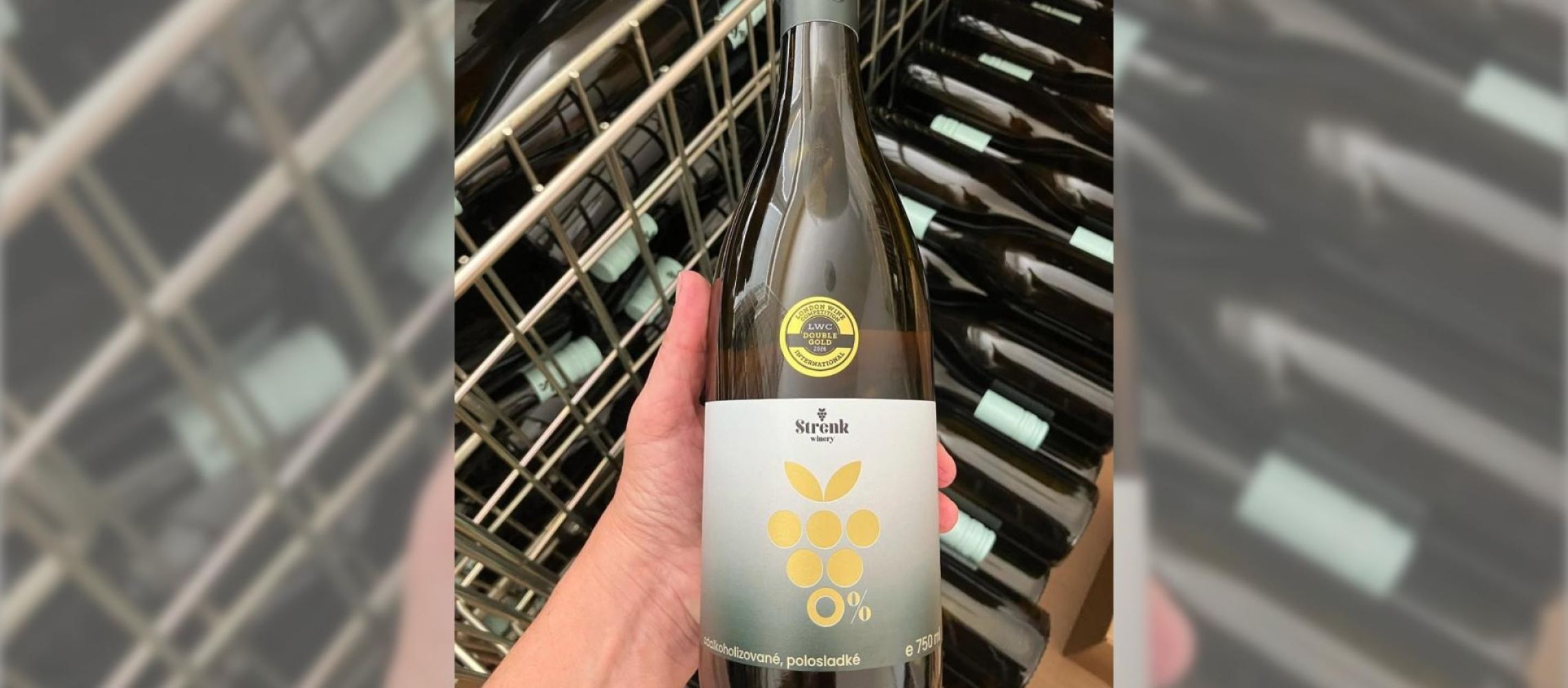
At the London Wine Competition 2026, Strenk Winery achieved significant recognition, including a Double Gold medal for Vín0.0% Muškát žltý polosladké. For Strenkova, the awards validate both the winery's approach and the growing maturity of the alcohol-free wine category.
"We see the success as confirmation that alcohol-free wines can now achieve the same level of quality and complexity as traditional wines," she says. "We believe the judges responded particularly well to the authenticity of our wines—their purity of aromatics, balance and ability to preserve both varietal and regional character."
For importers, distributors and hospitality operators, this combination of category growth and regional authenticity presents a compelling opportunity. As consumers increasingly seek premium no-and-low options, Strenk Winery offers something that remains relatively rare: alcohol-free wines with a clear sense of origin and a genuine connection to one of Europe's most historic wine regions.
Looking ahead, the winery's ambitions extend beyond category participation.
"Our ambition is to show international consumers and trade buyers that non-alcoholic wine can be a premium product with genuine origin, terroir character and strong gastronomic value," says Strenkova. "We want Vín0.0% to be perceived not simply as an alcohol-free alternative, but as a fully valued part of contemporary wine culture."
In doing so, Strenk Winery is helping redefine what alcohol-free wine can be—bringing the heritage of Tokaj into a new era while remaining firmly rooted in the values that made the region famous in the first place.
The 2026 London Wine Competition results are out — explore the winners and maximise your success. View Results | Order Stickers | Marketing Add-Ons