Super Early Deadline
31 August 2026
Judging
Date
22 & 23 March 2027
Winners Announcement
22 April 2027
31 August 2026
22 & 23 March 2027
22 April 2027
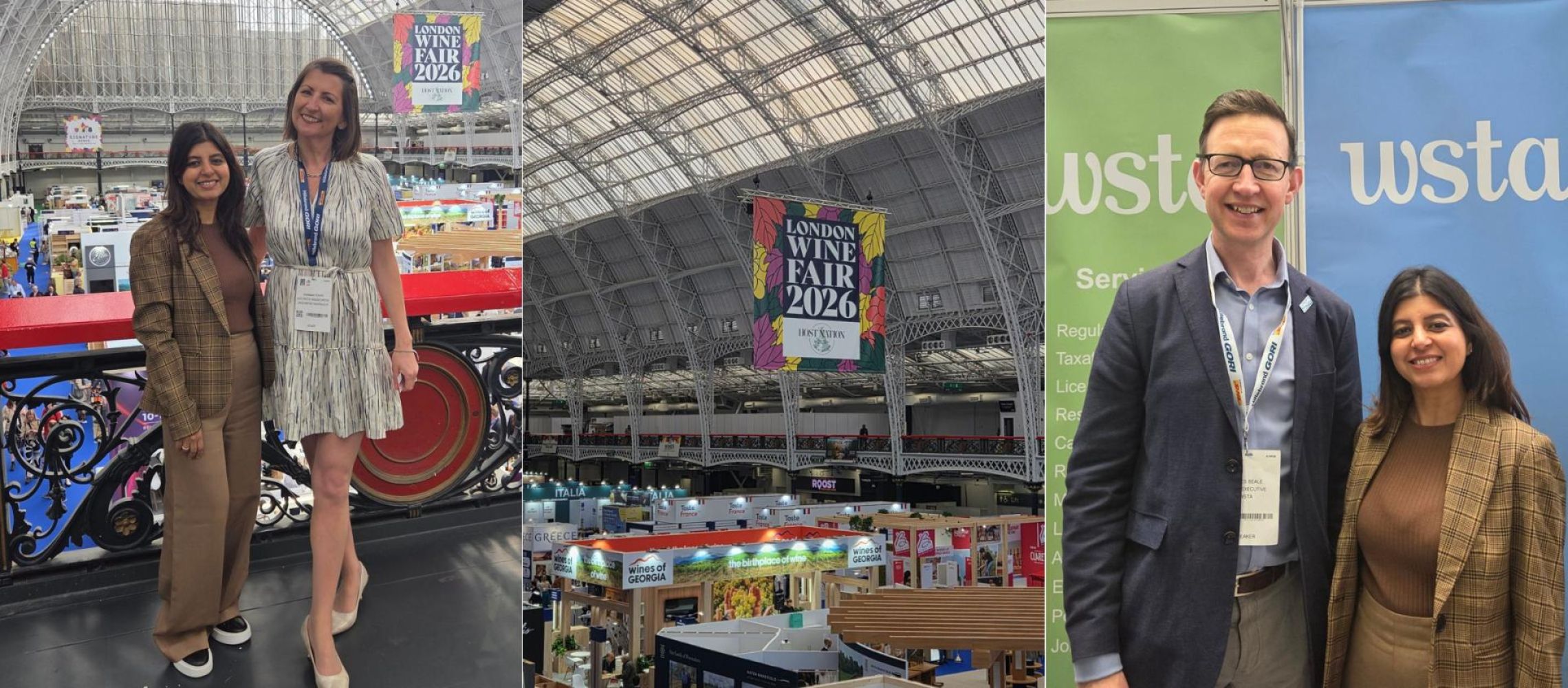
The 45th London Wine Fair, the first under Vindustrious management following last year's buyout, closed with attendance past 10,000 for the first time in six years. The numbers were encouraging. What mattered more was the mood.
This was a fair that did not pretend. The conversations on stage matched the conversations in the aisles, and if that sounds unremarkable, consider how rarely it is true.
The session everyone had circled before they arrived. Titled "Staying Grounded: Making Sense of a Rapidly Changing World," the opening address by WSTA chief executive Miles Beale kicked off Day One at Centre Stage, flanked by regulatory affairs director David Richardson and director of policy Simon Stannard.
Beale did not traffic in reassurance. He named the pressures, and he did not flinch from any of them. But the distinction he drew mattered: the things that are truly frightening are not the underlying consumption trends, which the trade knows well enough by now, but what happens when businesses cannot survive them.
"If you go back 15 years and we're now drinking 15% less than we were 15 years ago, there are some underlying trends we know are there," he said. "Those aren't new, and they shouldn't be scary. The things that are scary are when businesses aren't managing to survive or do well."
The structural argument at the heart of the session was pointed. While Scotch whisky is widely understood by the government as a major British export asset, Beale argued that Britain's role as one of the world's largest wine trading nations is routinely overlooked by policymakers who look at domestic production and see very little.
"What's much less well understood is that we're the second biggest importer of wine in the world by volume after Germany, and also second by value after the United States. If you're thinking about a nation that trades in wine, we're absolutely top of the tree. And that is not understood by the government, because they look at production."
On extended producer responsibility, the regulatory pressure he singled out as his most immediate concern: "It's not a tax, but it acts like a tax. It has the same downsides as a tax. It's meant to change behaviour, but it's quite a high cost. It's not being introduced in a way that I think is very effective."
What he offered in place of despair was a harder-edged form of optimism. "I've detected at the London Wine Fair this year that people are taking matters into their own hands. They're making some difficult decisions and are moving forward. Standing still, treading water, is not an option."
That distinction between performative optimism and the pragmatic kind ran through the entire fair.
The WSTA sessions that followed across the three days, including "Reasons to Be Cheerful" and "From Supermarket Shelf to Wine List," reinforced the point with market data from NIQ and CGA. The consumer has not gone anywhere. They are just different.
The Sustainability Hub, curated by Rose Davenport of Impact Focus, was one of the most active spaces at the fair. Davenport set the context plainly.
"I've been to 25 wine fairs here over the duration of my career. And I think in terms of the conversations around sustainability, this has been by far the most in-depth that these issues have been covered in."
The shift she identified is real. Sustainability has stopped being a branding conversation and has become an operational one. Retailers are no longer asking whether producers care about the environment. They are asking for data, timelines, and measurable commitments.
"Retailers and trading partners feel confident in what that company is doing. And that brings credibility. They are winning business as a result."
She also named the anxiety running in the opposite direction: producers doing genuine work but going quiet for fear of greenwashing accusations. Her counsel was direct. If you are doing the work, understand it, and then talk about it clearly. Labour rights and supply chain accountability emerged as among the hottest topics across the hub's sessions, alongside a live debate about certification frameworks and whether meaningful standardisation is coming.
The Host Nation initiative was the fair's most visible structural addition. For the first time, domestic producers were formally placed at the centre of the exhibition, with English and Welsh wine joined by Scottish and Welsh spirits, Northern Irish distillers and a broad sweep of British no-and-low, beer, cider and mead. Domestic wine exhibitor numbers were up nearly five times on the previous year.
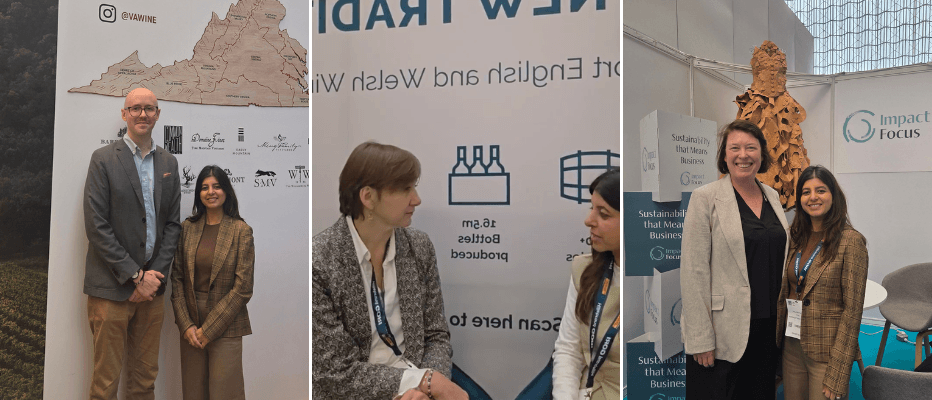
WineGB launched its new campaign, "Create New Traditions and Drink English and Welsh Wines," at the fair. The export story provided the commercial anchor: English and Welsh wine exports have risen from roughly 4% of production in 2022 to around 9% today, with 15% by 2030 as the stated target.
Defined Wine ran a pop-up tasting presenting more than 30 producers, the largest domestic showing the fair has seen. Balfour, Bolney, Chapel Down, Gusbourne, Simpsons, and Hattingley Valley were among those with a visible presence.
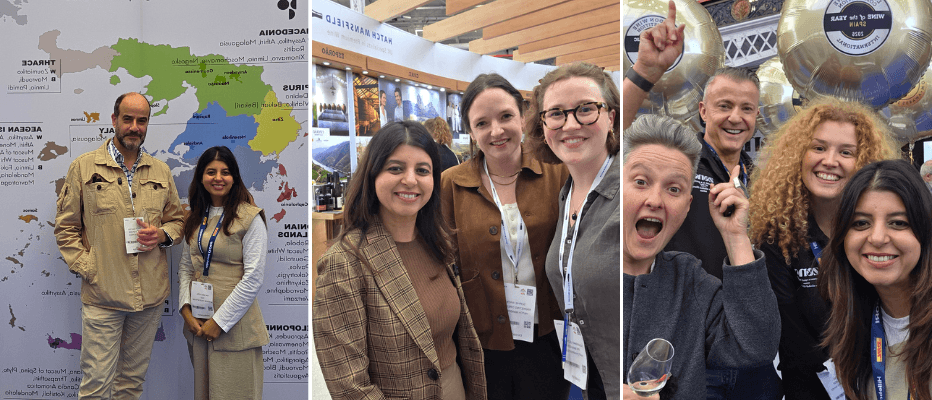
Beyond the domestic emphasis, the fair retained its international breadth. France, Italy, Spain, Portugal, and Greece all drew serious buyer traffic. Virginia Wine returned after a decade away, Georgia brought a strong contingent led by daily masterclasses, and Wines Unearthed once again served as the discovery zone for producers seeking a first foothold in UK distribution.
We spent time with Demetri Walters of Orpheus Wine, who runs a sourcing business focused on unrepresented Greek producers. His read on where the category sits: "Greek wine has grown about 6% in the UK market in the last year. In this market, it's very healthy." The focus is on indigenous varieties and producers with a clear identity. Brexit remains the biggest structural obstacle. "It hampers everything. It creates difficulties in the market where they don't need to exist."
Matthew Brown, championing Virginia Wine after the region's ten-year absence from the fair, was candid about where it stands. "I described us as having just come through puberty. We were trying to learn about ourselves and figure out who we are. Now we have this opportunity to be a bit more outspoken." Cabernet Franc is Virginia's commercial focus: bright acidity, soft tannins, food-friendliness. The mission at this fair was not to prove quality but to fix a coherent identity in buyers' minds.
Sophie Wren, Director of Marketing at Hatch Mansfield, who has attended LWF since 1994, offered the most grounded read on what actually moves wine in this market. "Always put the consumer at the heart of all of your decisions. Our wines need to serve an occasion; they need to serve a purpose." On awards: "They offer independent endorsement. It's not us saying our wines are amazing. It's someone external giving that reassurance."
Laura Willoughby, founder of Club Soda, has spent 14 years building the case for this category and was direct about where it has arrived.
The sessions she led across the three days covered functional drinks, tea-led alternatives, food pairing, and buyer decision-making. The programme does not look like an afterthought. The category itself no longer does either.
"We're in a spot where we've got drinks that aren't necessarily replica products. We've got drinks that use traditional methods like shrub-making. We've got fruit cuvées. We've got things that use kombucha-style making in order to give acidity and bite to a drink."
The legislative push she is most focused on is aligning UK descriptors with the European Union's new wine package, specifically getting 0.5% ABV officially recognised as "alcohol-free" in the UK. "That's the biggest change we need."
Beale's assessment was characteristically measured: "Those who are drinking no-alcohol products are drinkers. They're not a different audience. So to me it's an obvious diversification." And equally honest about where the category still sits: "It's not even four percent of the category here in the UK. There's a long way to go."
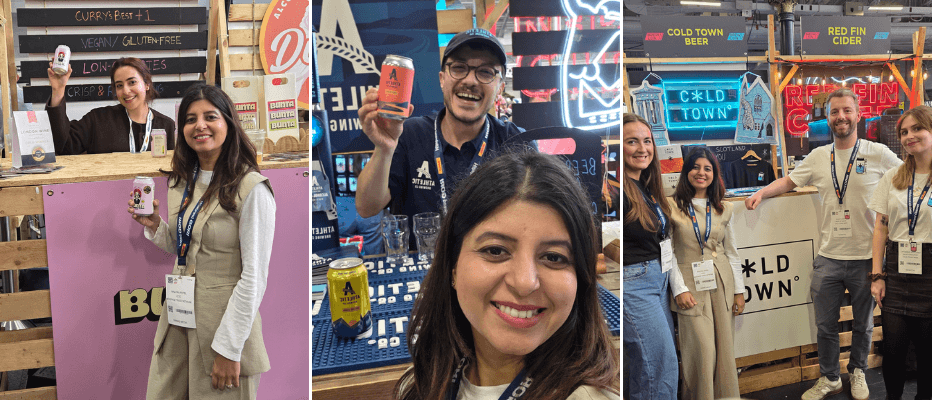
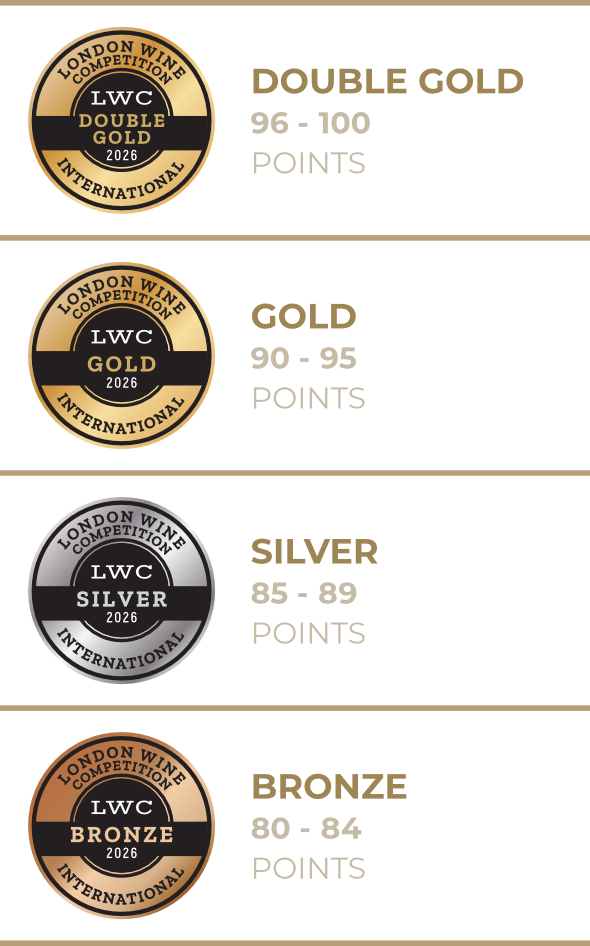
For the first time in the fair's history, craft beer and cider came under the roof through a dedicated BREW//LDN section. Bunta Beer Co (Bunta Citrus Lager, Gold at 94), Cold Town Beer (Baltic IPA, Double Gold at 96), Athletic Brewing (Free Wave, Double Gold at 97 points), and a range of UK independents drew consistently busy crowds across all three days.
The crossover between beer, spirits, wine, and no-and-low buying responsibilities is increasingly visible in how independent retailers and on-trade buyers move around the fair. This is no longer a wine fair that has made room for beer. The two audiences are converging.
The range of approaches producers took to their London Competitions wins was instructive.
Claxton's Spirits were clear that the medals were doing commercial work: starting conversations with buyers who might otherwise have moved on. Third-party validation on a crowded floor provides a shortcut that works.
Zeno turned their haul into theatre. Balloons printed with their London Competition wins floated above the stand and drew foot traffic from well across the hall. Unapologetic and effective.
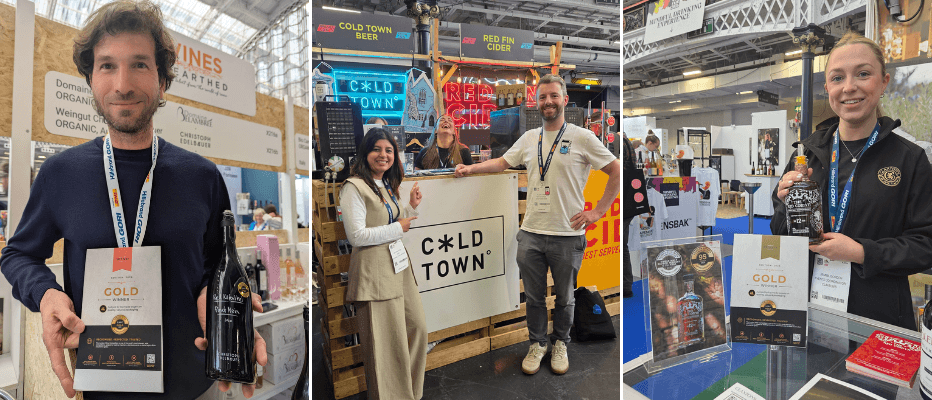
Murassi carried their awards on a prominent roll-up banner and built the stand conversation around the wine itself. The focus is Lambrusco, specifically the work of repositioning a category the UK wrote off after the cheap, sweet supermarket versions of the 1980s and 90s. "Lambrusco should be red. It's a red grape." The style they are working with is sparkling, dry, and fruit-forward, grown near Vicenza in Reggiliana. The medal gives them a way into that conversation. Without it, the word Lambrusco alone is still working against them.
Spy Valley used its wins to reinforce premium positioning in a busy New Zealand section, where buyers making fast decisions across many stands benefit from exactly that kind of consistent quality signal.
In a fragmented market, medals function as shorthand. Not vanity. The beginning of a conversation that might not otherwise start.
What the 45th London Wine Fair managed, more than any specific announcement or launch, was the seriousness of purpose. The Host Nation initiative landed, the BREW//LDN section delivered genuine energy, the sustainability programming made an operational rather than aspirational case, and the WSTA sessions gave the industry the honest conversation it needed before any of the tasting began.
Beale put it plainly: "Everyone is very focused on what the customer wants and how to deliver it to them in the most cost-efficient way possible."
It is the least romantic sentence spoken at the fair all week, and probably the most useful. In this market, that clarity is not a tactical position. It is what staying in business looks like.
London Wine Fair ran from 18 to 20 May 2026 at Olympia London.
Also Read:
What Judges Think About the London Wine Competition
The 2026 London Wine Competition results are out — explore the winners and maximise your success. View Results | Order Stickers | Marketing Add-Ons